How to Store Matcha for Maximum Freshness and Flavour

Quick Summary
| Key Point | Explanation |
|---|---|
| 1. Use airtight containers | Store matcha in glass jars or stainless steel tins to protect from light, moisture, and air. |
| 2. Keep matcha away from moisture | Avoid humid areas and ensure stability in temperature to prevent clumping and degradation of flavour. |
| 3. Store in a cool, dark place | Use a cupboard far from heat sources to maintain freshness and prevent oxidation. |
| 4. Regularly check for quality | Inspect matcha every few weeks for colour, smell, and texture to ensure it remains fresh. |
| 5. Discard if quality declines | If matcha shows signs of deterioration, such as off smells or colour changes, discard it immediately. |
Step 1: Select an airtight container for matcha
Your ceremonial matcha's shelf life depends almost entirely on what you store it in. The right container creates a sealed barrier that protects your precious powder from the enemies of freshness: moisture, oxygen, and light.
Choose from these proven container options:
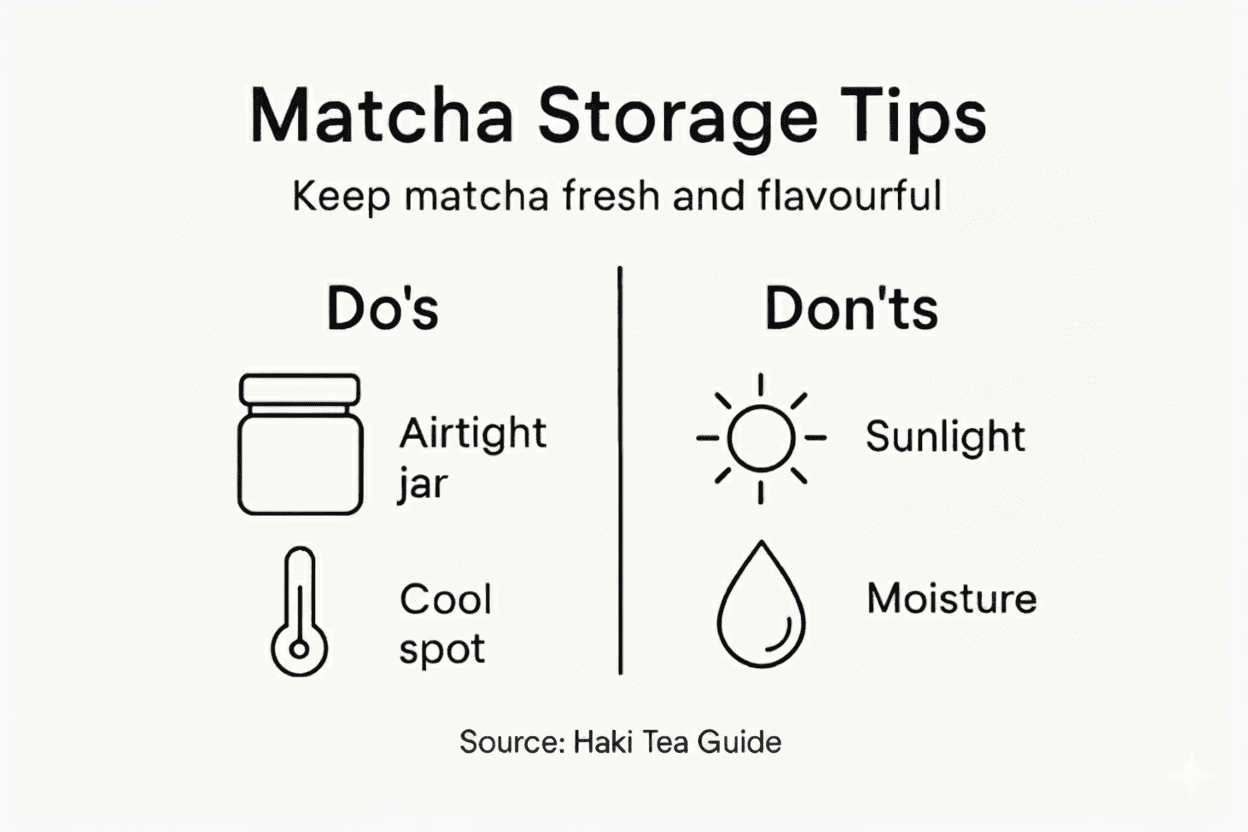
Glass jars with tight-fitting lids — the gold standard for matcha storage, especially dark or opaque glass that blocks light
Stainless steel tins — excellent for protecting against moisture and air exposure
Vacuum-sealed bags — practical if you're transferring matcha from its original packaging
Ceramic containers with rubber seals — stylish and functional, though ensure the seal is genuinely airtight
Airtight containers prevent air exchange which stops oxidation and moisture intrusion—two factors that quickly degrade matcha's vibrant colour and delicate flavour profile. Your container must have a completely secure sealw ith no gaps or loose threads on the lid.
Test the seal before committing. Close the lid firmly and try to twist it back open—it should require real effort. If it opens easily, the seal won't protect your matcha adequately.
Size matters too. Select a container just large enough for your matcha supply without excess air space inside. When you add desiccant packets like silica gel to absorb moisture, there's less room for stray air to circulate and compromise quality.
| Container Type | Protection Against Light | Seal Quality | Visual Appeal |
|---|---|---|---|
| Opaque Glass Jar | Excellent | Very secure | Modern and elegant |
| Stainless Steel Tin | Good | Robust | Minimalist look |
| Ceramic with Rubber Seal | Good | Depends on rubber fit | Traditional style |
| Vacuum-Sealed Bag | Varies with packaging | Excellent if unopened | Simple, compact |
The container itself is only half the solution—the seal is what actually preserves your matcha's freshness and flavour.
Pro tip: Keep your matcha in its original HAKI packaging inside your airtight container for double protection; the original bag is already optimised for matcha, and the extra layer prevents light exposure.
Step 2: Prepare matcha for storage by avoiding moisture and sunlight
Before your matcha goes into its container, you need to understand what damages it. Moisture and sunlight are matcha's two main enemies, and protecting against both is crucial for preserving freshness.
Matcha's delicate chemical composition, including chlorophyll and amino acids, is highly sensitive to environmental factors. Exposure to humidity and UV light leads to oxidation and rapid loss of flavour. Even brief exposure can begin degrading your powder's vibrant colour and rich umami notes.
Here's what you need to do:
Keep matcha away from your kitchen window or anywhere with direct sunlight
Store it in a cool, dark cupboard rather than on open shelves
Avoid areas prone to steam, like above the kettle or near the sink
Never refrigerate matcha, as temperature fluctuations cause condensation inside the container
Keep it away from humid rooms like bathrooms or laundry areas
Moisture is particularly problematic because matcha is a finely ground powder with a huge surface area. Water particles cling to it instantly, clumping the powder and triggering chemical reactions that destroy its antioxidant properties. Storing matcha in opaque, moisture-proof containers preserves its vibrant green colour and rich umami flavour.
The room temperature itself should be stable. Fluctuations between warm and cold cause the air inside your container to expand and contract, pulling moisture in and pushing it out repeatedly. A consistent environment in a dark cupboard at around 15-20°C is ideal.
Light and humidity don't just fade matcha's colour—they destroy the bioactive compounds that make it worth drinking in the first place.
Pro tip: Store your matcha container in the back of a cool cupboard away from the oven, and keep a small packet of food-grade silica gel inside the container to actively absorb any stray moisture that sneaks in.
Step 3: Put matcha in a cool, dark place
Where you store your matcha matters just as much as what you store it in. The location you choose will determine whether your powder stays vibrant and flavourful or gradually loses its magic.
Temperature is your first consideration. Matcha should be stored in a cool, dark place away from heat sources like stoves, ovens, and radiators. Excessive warmth accelerates oxidation, turning that brilliant green into a dull, brownish powder within weeks.
Your ideal storage spots include:
A cupboard in a cool hallway or pantry
A dark shelf away from kitchen appliances
A bedroom wardrobe or storage box in a cool room
The back of a cool kitchen cupboard (never above or near the cooker)
A cellar or cool storage area if you have one
Avoid these locations at all costs:
Above or next to the stove or oven
Near radiators or heating vents
In direct sunlight on windowsills
In humid areas like bathrooms or laundry rooms
In the fridge (temperature fluctuations create condensation)
Temperature stability matters more than actual coldness. Your matcha prefers a consistent 15-20°C rather than a fluctuating temperature that swings between warm and cool. Think of it like a good sleep environment—steady and unchanging beats dramatic shifts.
Darkness is equally critical. Light triggers chemical reactions that fade colour and degrade flavour compounds. Even ambient room light will slowly damage matcha over months. A completely opaque, closed cupboard is far superior to a transparent container on a shelf, regardless of how beautiful it looks.
The best location for matcha is where you'd store fine chocolate or expensive spices—cool, dark, and undisturbed.
Pro tip: Mark your cupboard shelf with the storage date on a small label, so you remember exactly how long your matcha has been stored and can use it within the optimal window of freshness.
Step 4: Check matcha regularly for signs of deterioration
Your matcha won't stay perfect indefinitely. Regular inspections help you catch problems early and use your powder at its best before quality declines.
Fresh matcha has unmistakable characteristics. It displays a vibrant, bright green colour, carries a fresh, grassy aroma, and tastes smooth with a distinctive umami flavour. Any deviation from these qualities signals that deterioration has begun.
Here's what to check for:
Colour changes from vibrant green to dull, yellowish, or brownish hues
Unpleasant odours or a musty, stale smell instead of fresh aroma
Clumping or caking caused by moisture exposure
Increased bitterness or loss of that signature umami sweetness
Mould or any visible discolouration on the powder surface
Unusual texture that feels grainy or sticky when you touch it
Indicators of deterioration include changes in colour, development of off smells, and clumping due to moisture. Check your matcha every 2–3 weeks if opened, or monthly if sealed and unopened.
Make it part of your routine. When you reach for your matcha to prepare a bowl, spend 10 seconds observing the powder before scooping. Look at the colour in natural light. Take a gentle sniff. These quick checks cost nothing and prevent disappointment.
If your matcha shows any warning signs, don't use it. Spoilt matcha won't make you ill, but it won't deliver the vibrant flavour or health benefits you're paying for. Discard it and start fresh with a new batch.
Use this summary to identify when your matcha may be losing freshness:
| Deterioration Sign | Likely Cause | Suggested Action |
|---|---|---|
| Dull or yellowish hue | Exposure to light/air | Discard and replace |
| Musty or stale smell | Absorbed moisture | Dispose immediately |
| Clumping or caking | High humidity | Avoid using; bin it |
| Bitter, flat flavour | Chemical breakdown | Start a new batch |
| Mould or discolouring | Severe contamination | Do not consume |
Fresh matcha is a pleasure to drink. If it no longer looks, smells, or tastes like your expectations, it's telling you something has changed.
Pro tip: Open your container in good natural light and compare the colour against your matcha's original appearance or packaging photos—this visual comparison catches subtle colour shifts that poor lighting might mask.
Preserve Your Matcha's Freshness with Premium Japanese Ceremonial Grade Tea
Storing matcha properly to maintain its vibrant colour and rich umami flavour can be challenging. From selecting an airtight container to finding the perfect cool, dark storage space, every step matters to protect your green tea powder from moisture, air, and light—enemies that rapidly degrade its quality. If you want to experience matcha at its peak freshness and savour the authentic taste of Japanese tradition, choosing high-quality ceremonial grade matcha is just as important as following these storage tips.
Discover the difference that premium ingredients make by browsing our exceptional selection at Haki Tea. Every batch of ceremonial grade matcha is carefully sourced from Japan to ensure you receive powder with the perfect vibrant green hue and naturally sweet, smooth flavour. Store your tea in a suitable container as outlined in this article and keep it in an ideal environment for the best results. Start your journey to exquisite matcha today by visiting our homepage and elevate your experience with expert guidance available on How to Store Matcha for Maximum Freshness and Flavour. Take control of your tea ritual now and enjoy the full benefits with matcha that stays fresh for longer.
Frequently Asked Questions
How should I store matcha to maintain its freshness and flavour?
Store matcha in an airtight container made of dark glass, stainless steel, or ceramic with a secure seal. Ensure the container is kept in a cool, dark cupboard away from light, heat, and moisture to preserve its quality.
What types of containers are best for matcha storage?
Opt for opaque glass jars, stainless steel tins, or ceramic containers with rubber seals, all of which provide excellent protection against light and moisture. Avoid using transparent containers, as they allow light to degrade the matcha over time.
How do I prepare matcha for storage to avoid moisture and sunlight?
Before storing, ensure your matcha is kept away from humidity and direct sunlight by placing it in a cool, dark cupboard. Avoid areas like above the kettle or near windows, as they can introduce moisture and light, negatively affecting the matcha's freshness.
How often should I check my matcha for signs of deterioration?
Inspect your matcha every 2–3 weeks if opened or monthly if sealed. Look for changes in colour, smell, or texture, as these could indicate that your matcha is no longer fresh and should be discarded.
What temperature is ideal for storing matcha?
Matcha prefers a stable environment at around 15-20°C, away from heat sources like stoves or radiators. Prioritise consistent temperature over coldness to prevent condensation in the container.
What are the signs that my matcha has gone bad?
Signs of deterioration include a dull or yellowish hue, unpleasant odours, clumping, increased bitterness, or visible mould. If you notice any of these indicators, discard the matcha to ensure you're consuming a product that maintains its quality.