What is matcha?
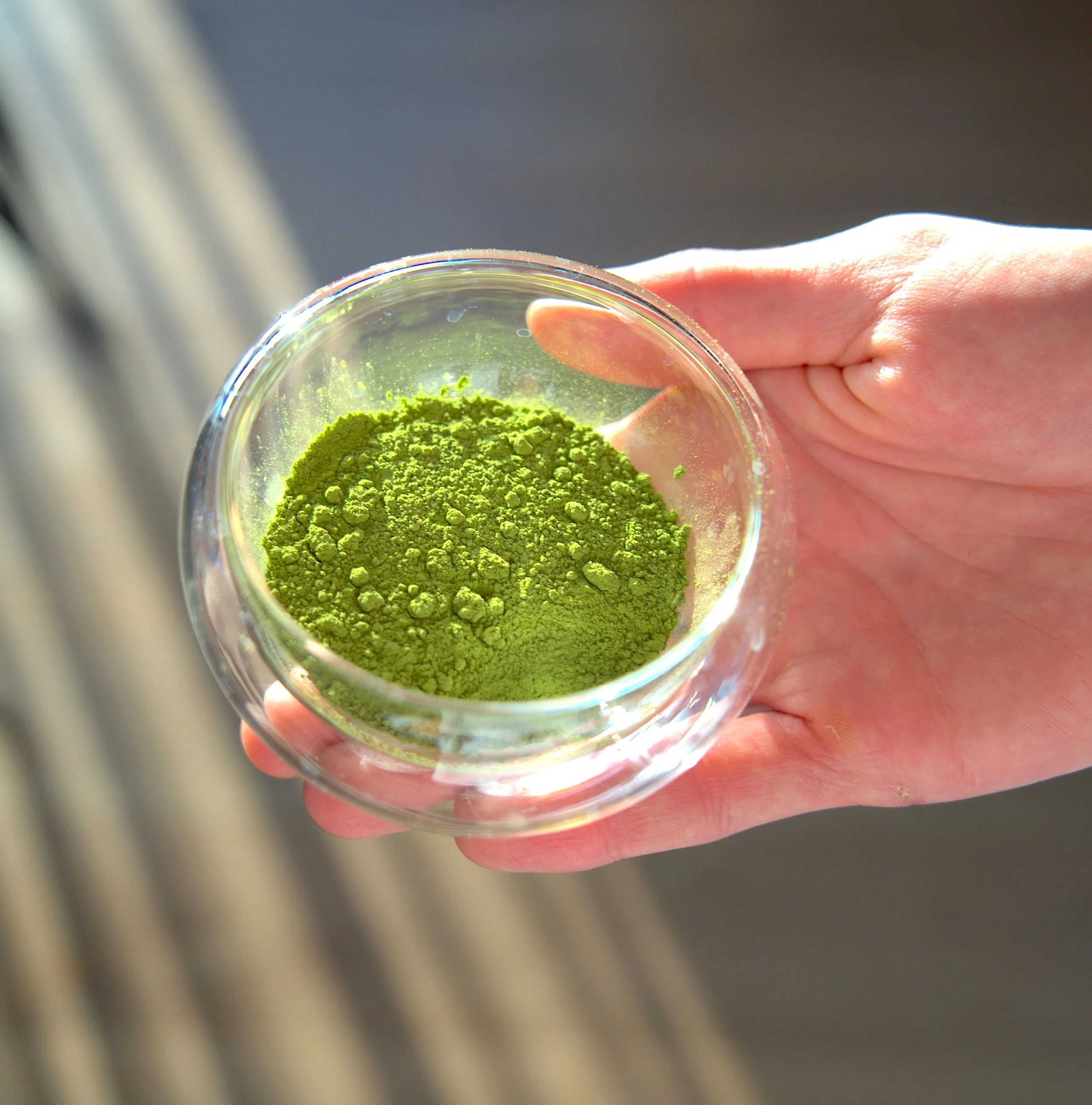
Matcha is a finely ground Japanese tea or better said green tea made from shade-grown leaves that are stone-milled into a vibrant emerald powder and whisked directly into hot water, so you drink the entire leaf rather than an infusion. It is often called the “champagne of green tea” because of the care taken in its cultivation, processing, and traditional use in Japanese tea ceremony.
Key takeaway: Matcha is a finely ground Japanese green tea made from shade-grown leaves - often called the champagne of green tea.
What matcha is
Matcha comes from the same plant as other teas, Camellia sinensis, but the plants are shaded for several weeks before harvest, which intensifies chlorophyll, amino acids like L-theanine, and its deep green color.
After harvesting, the leaves are steamed, dried, de-stemmed, and stone-ground into an ultra-fine powder known as matcha.
Key takeaway: As all tea matcha comes from the plant Camellia sinensis, however it is the shading and the processing that sets matcha apart.
How it’s different from regular green tea
With regular green tea, the leaves are steeped and then discarded, so many nutrients remain in the leaf, but with matcha you ingest the whole leaf suspended in water.
This whole-leaf consumption gives matcha higher levels of antioxidants, caffeine, and L-theanine per cup compared with standard brewed green tea.
Key takeaway: In matcha you consume the whole leaf ( or much rather the leaf pulp as processing removes the veins and other parts of the leaf ) whilst in green tea in only consume the water left after brewing the leaf.
Taste and effects
Quality matcha has a rich, creamy texture with a sweet, vegetal, umami flavor and only slight bitterness, especially in higher “ceremonial” grades.
The combination of caffeine and L-theanine provides a calm, focused energy that lasts for hours, often described as relaxed alertness rather than the jittery spike of coffee.
Key takeaway: Quality matcha has a rich, creamy texture with a sweet, vegetal, umami flavor.
History and culture
Matcha has been central to Japanese tea ceremony for centuries and has been used by Zen Buddhist monks to support meditation through sustained focus and calm.
Samurai and later modern drinkers have valued matcha for its steady energy and sense of well-being, which is why it remains a daily ritual for many people today.
Key takeaway: Matcha has been central to Japanese tea ceremony for centuries and has been used by Zen Buddhist monks - many sources claim that matcha was invented for the first time more than 800 years ago.