Hojicha vs Matcha: Which is healthier?
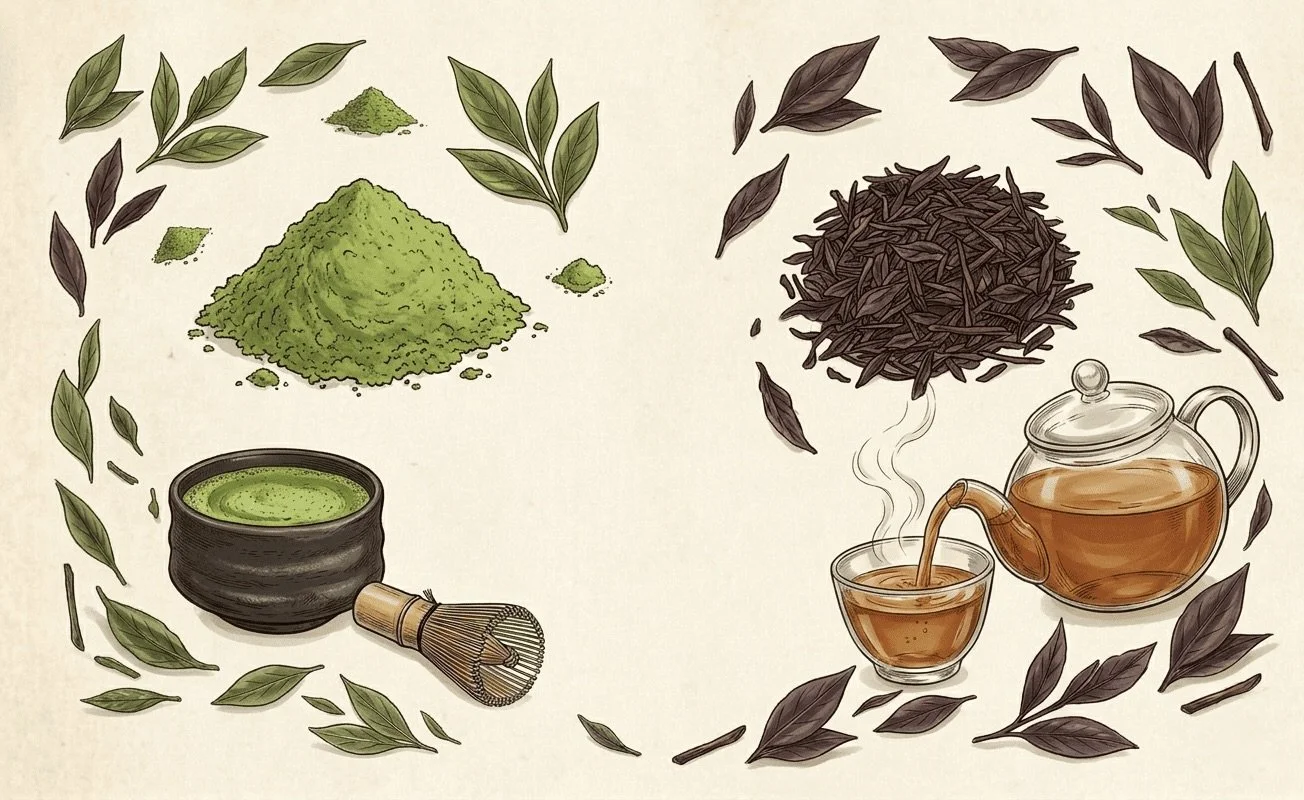
In summary
Antioxidant King: Matcha wins on raw power, offering up to 10× the EGCG of steeped teas for metabolism and skin health.
The Energy Profile: Matcha provides a 6–hour calm focus (caffeine + L-theanine); Hojicha is nearly caffeine-free and sleep-safe.
Stomach Friendly: Hojicha is roasted and low-acid, making it the best choice for sensitive stomachs or drinking on an empty stomach.
Stress Relief: Hojicha’s roasted aroma (pyrazines) is scientifically proven to lower cortisol and relax the nervous system instantly.
Circulation Boost: While Matcha fuels the brain, Hojicha helps warm the body by expanding blood vessels through its unique roasting chemistry.
In the rapidly expanding world of Japanese tea, two heavyweights dominate the conversation: vibrant, powdered Matcha and earthy, roasted Hojicha.
Both originate from the same plant (Camellia sinensis), yet they offer vastly different sensory experiences and chemical profiles. If you’ve found yourself standing in a coffee shop or tea aisle wondering, "Which one is actually healthier?" you are not alone.
‘‘The answer isn't a simple "yes" or "no." It depends entirely on what "healthy" means for your body, your lifestyle, and your time of day.’’
The Core Difference: Cultivation vs. Processing
To understand the health benefits, we first must understand the journey of the leaf.
Matcha: The Potent Powerhouse
Matcha is made from Tencha leaves. For 3–4 weeks before harvest, the tea bushes are shade-grown. This shading forces the plant to overproduce chlorophyll and amino acids (especially L-Theanine), resulting in its signature emerald hue and potent nutritional profile. The veins and stems are removed, and the remaining leaf is slow-ground into an exceptionally fine powder.
Crucially, when you drink Matcha, you are consuming the entire leaf.
Hojicha: The Roasted Comforter
Hojicha is typically made from Bancha (common sencha harvested later in the season), which inherently has slightly less caffeine. The defining characteristic of Hojicha is its processing: the leaves, and often the stems (Kukicha), are high-heat roasted at around 200°C (392°F).
This roasting process causes the leaves to turn a deep reddish-brown and initializes the Maillard reaction (the same chemical reaction that makes toasted bread or roasted coffee smell amazing). This process also sublimates (evaporates) caffeine and alters the catechins.
Health Battle 1: Antioxidant Activity (EGCG)
When people say "healthy green tea," they usually mean antioxidants—specifically, Catechins, and most importantly, EGCG (Epigallocatechin gallate), which is linked to heart health, metabolism support, and cellular protection.
The Winner: Matcha.
Because you ingest the entire leaf of shade-grown plants, Matcha contains significantly more catechins per gram than any other tea. Studies suggest Matcha can have 3 times more EGCG than standard brewed green tea, and exponentially more than Hojicha. Hojicha’s roasting process degrades a significant portion of these heat-sensitive antioxidants.
Health Battle 2: Energy vs. Anxiety (Caffeine and L-Theanine)
This is where the distinction becomes critical for individual wellness.
For a Cognitive Boost: Matcha Wins.
Matcha has a high concentration of caffeine, almost equivalent to coffee in some servings. However, because it is also rich in L-Theanine (the amino acid that promotes relaxation), Matcha provides "calm alertness." The L-Theanine smooths out the caffeine spike, preventing the jitters and crash often associated with coffee.
For a Gentle Experience or Evening Drink: Hojicha Wins.
Hojicha is one of the lowest-caffeine green teas available. The high roasting temperatures destroy much of the caffeine content. If you are sensitive to stimulants, suffer from anxiety, or are looking for a warming beverage after 2 PM, Hojicha is far healthier for you because it will not disrupt your sleep quality.
Health Battle 3: Digestibility and pH
The Winner: Hojicha.
For some individuals, raw green tea (like high-grade Sencha or Matcha) can be slightly astringent (bitter) or "cold" on the stomach, causing mild nausea if consumed on an empty stomach. This is due to the high tannin count.
Hojicha’s roasting reduces tannin content and gives the tea an uncommonly warm, smooth, and slightly sweet flavor profile. It is renowned in Japan as being "easy on the stomach" and is often the first tea given to children or elderly individuals.
Matcha vs Hojicha – Quick Comparison
| Metric | Matcha | Hojicha |
|---|---|---|
| Appearance | Vivid, emerald green powder | Reddish-brown roasted leaves or stems |
| Preparation | Whisked powder (whole leaves consumed) | Steeped leaves (leaves discarded) |
| Flavor Profile | Umami, slightly sweet, grassy, rich | Nutty, toasty, smoky, caramel-like |
| Caffeine Content | High (30–70 mg per cup) | Low (7–20 mg per cup) |
| Antioxidant Level (EGCG) | Very high | Moderate to low |
| L-Theanine Level | High | Low (partially reduced by roasting heat) |
| Best Time of Day | Morning / Pre-workout | Afternoon / Evening |
| Effect on Stomach | Can feel strong on an empty stomach | Very gentle and low-acid |
Verdict: Which is Actually "Healthier"?
The deep research reveals that neither tea is universally "healthier." They are tools for different wellness goals.
Choose Matcha If:
You need sustained, calm energy for work or exercise.
Your primary goal is maximal antioxidant intake (anti-aging, metabolic boost).
You enjoy rich, grassy, and complex umami flavors.
Choose Hojicha If:
You are sensitive to caffeine or suffer from anxiety.
You want a warming, comforting beverage in the evening that won't disrupt sleep.
You have a sensitive stomach and find other green teas irritate you.
Ultimately, the healthiest tea is the one you enjoy drinking every day. Why not make room for both?