How to brew/prepare hojicha powder: the quick answer
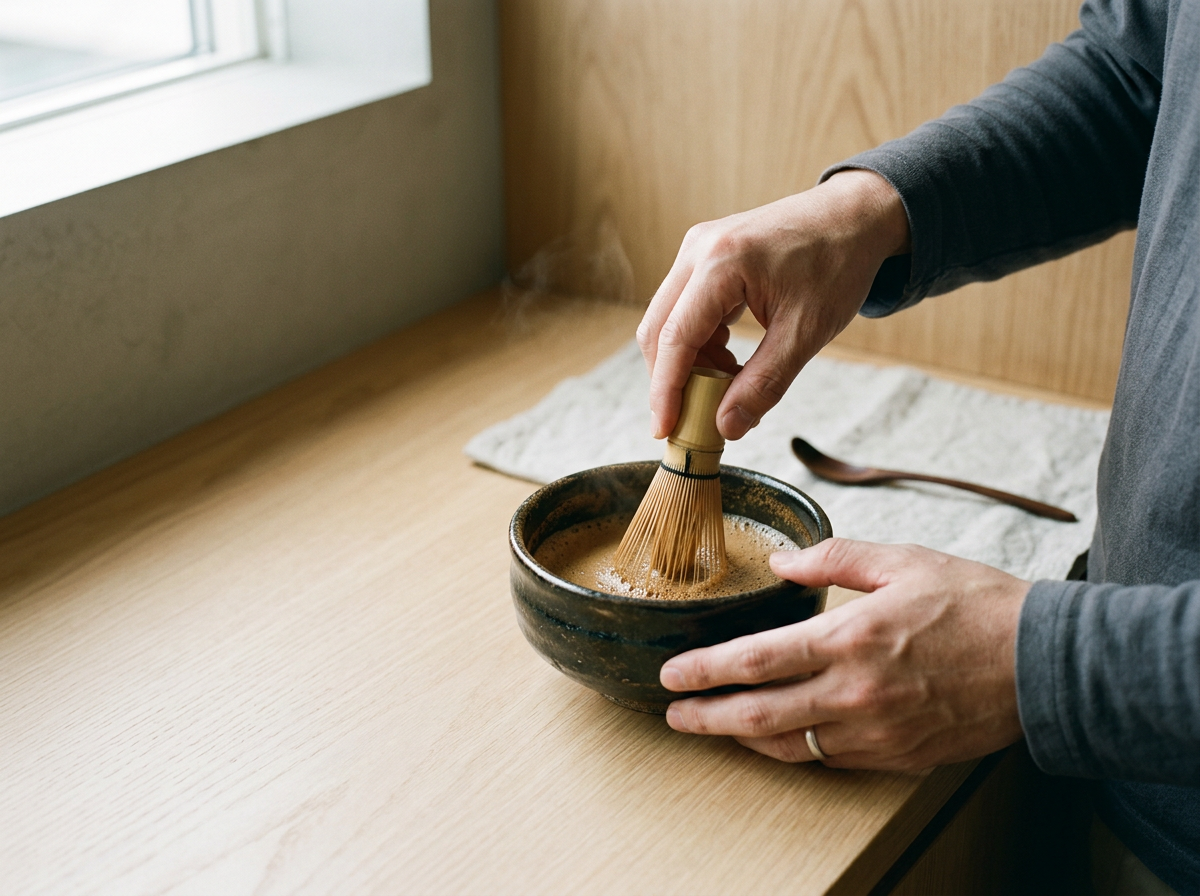
You don't brew hojicha powder the way you brew loose tea. There is nothing to steep or strain. Instead, you whisk the powder into a little hot water so it dissolves completely, then top it up with more water or milk.
Quick method (1 cup):
Sift 1 teaspoon (2 g) of hojicha powder into a bowl or mug.
Add 60 ml of water at 80–90°C (175–195°F).
Whisk in a fast zig-zag for 15–20 seconds until smooth and lightly foamy.
Top up with 60–120 ml of hot water, or pour over steamed milk for a hojicha latte.
That's it. The whole cup takes under two minutes, and because you drink the whole roasted leaf, you get a fuller, creamier, more toasty cup than steeped hojicha.
Why you "prepare" hojicha powder rather than brew it
Hojicha is Japanese green tea that has been roasted until the leaves turn reddish-brown. Loose-leaf hojicha is brewed: you steep the leaves, then pour off the tea and leave the leaves behind. Hojicha powder is those same roasted leaves, stone-milled or finely ground.
Powder doesn't dissolve like sugar and it doesn't steep like leaves. It suspends in water, which is why it needs whisking. If you simply pour hot water on it, the powder floats in dry clumps and then sinks. A few seconds of whisking breaks it into a smooth, even drink.
So when people search for how to "brew" hojicha powder, they mean how to make a cup from it. The method is the same as matcha, with a little more freedom on temperature.
What you need
Hojicha powder. A fine, freshly milled powder dissolves best. Try our hojicha powder.
A sifter or small tea strainer. Optional, but it's the single best way to avoid lumps.
Something to whisk with. A bamboo whisk (chasen) gives the smoothest result. A handheld milk frother is faster. A spoon or a lidded jar works in a pinch.
A bowl or wide mug. A wide base gives the whisk room to move.
Hot water. A kettle with temperature settings helps, but isn't required (see the temperature section).
How to brew hojicha powder, step by step
1. Measure. Use 1 teaspoon (about 2 g) of powder for a standard cup. Use 2 teaspoons (4 g) for a stronger, more chocolatey cup or for a latte that needs to stand up to milk.
2. Sift. Tap the powder through a fine sifter into your bowl. Hojicha powder clumps easily, especially in a humid kitchen, and sifting takes five seconds.
3. Add a little water. Pour in about 60 ml of 80–90°C water. Starting with a small amount makes a concentrated base that's much easier to whisk smooth than a full cup of water.
4. Whisk. With a bamboo whisk, make a few slow circles to wet the powder, then switch to a quick zig-zag ("W" or "M" shape) from the wrist for 15–20 seconds. Stop when no dry specks remain and a light foam forms on top.
5. Finish. For a plain cup, add another 60–120 ml of hot water and stir. For a latte, pour the base over steamed or cold milk (ratios below).
6. Sweeten if you like. Hojicha is naturally sweet and caramel-like, so many people skip sugar. A little maple syrup or honey brings out the roasty notes.
| Drink | Powder | Water to whisk | Then add |
|---|---|---|---|
| Light everyday cup | 1 tsp2 g | 60 mlat 80–90°C | 90–120 mlhot water |
| Strong, rich cup | 2 tsp4 g | 60 mlat 80–90°C | 60 mlhot water |
| Hot hojicha latte | 1–2 tsp2–4 g | 30–60 mlat 80–90°C | 150–200 mlsteamed milk |
| Iced hojicha latte | 2 tsp4 g | 30–60 mlat 80–90°C | 150 mlcold milk over ice |
| Iced hojicha (no milk) | 1–2 tsp2–4 g | 60 mlat 80–90°C | 150 mlcold water over ice |
For lattes, more powder and less water make a thicker base, so the hojicha flavour isn't lost in the milk. Oat milk and whole dairy milk both pair especially well with hojicha's toasty, nutty taste
What water temperature is best for hojicha powder?
Use 80–90°C (175–195°F) for a full, toasty cup, or 70–80°C (160–175°F) for a softer, sweeter one. Just avoid water straight off the boil, which can taste flat and slightly scorched.
You'll see both ranges recommended online, and both work. Hojicha is far more forgiving than matcha because roasting mellows the leaf, so it rarely turns bitter. Hotter water brings out the roasted, coffee-and-cocoa notes. Cooler water gives a rounder, caramel sweetness.
No thermometer? Boil the kettle and let it stand for 2–3 minutes for roughly 85–90°C, or add a splash of cold water to the bowl before the hot water.
Three ways to prepare hojicha powder
Bamboo whisk (smoothest). The traditional method gives the finest, silkiest texture and the best foam. Use the steps above. A chasen lasts longer if you soak the tines in warm water for a minute before use.
Milk frother (fastest). Add the powder and 60 ml of warm water to a mug, then run a handheld frother for 10–15 seconds. You can also froth the powder straight into warm milk for a latte in one step.
Lidded jar or shaker (best for iced drinks). Add powder and a little room-temperature water to a jar, close it tightly and shake hard for 15–20 seconds. Pour over ice and milk. This also works for a cold hojicha with no hot water at all, though it may need a few seconds more shaking.
A spoon works too, like stirring hot chocolate. Add the water a splash at a time and press out any lumps against the side of the mug before adding the rest.
Can I make hojicha powder from leaves?
Yes. You can grind loose-leaf hojicha into powder at home with a spice grinder, a burr coffee grinder or a mortar and pestle. Home-ground powder will be coarser than stone-milled powder, so it's best for lattes, baking and smoothies rather than a pure cup.
How to grind hojicha leaves into powder:
Use dry, fresh hojicha leaves. Any loose-leaf hojicha works. Stems (kukicha hojicha) grind less finely.
Grind in short pulses. Blitz 10–15 g at a time for 5–10 seconds, resting between pulses. Long grinding heats the tea and dulls the aroma.
Sift. Shake the result through the finest sieve you have. Re-grind what's left in the sieve.
Store airtight. Keep it in a sealed tin away from light and heat, and use it within a few weeks.
Note** you need a super fine grinder in order to make this work and super dry leaves!
Can I make it from regular green tea leaves? Yes, by roasting them first. Heat a dry, heavy pan over medium-low heat, add a small handful of sencha or bancha, and keep the leaves moving for 3–5 minutes until they turn reddish-brown and smell toasty. Let them cool completely, then grind as above. Roast in small batches and watch closely; the leaves go from toasted to burnt quickly.
| Home-ground from leaves | Stone-milled hojicha powder | |
|---|---|---|
| Texture | Slightly gritty, some sediment | Very fine, silky |
| Dissolves | Needs sifting and settles faster | Whisks smooth easily |
| Best for | Lattes, baking, smoothies | Pure cups, lattes, everything |
| Flavour | Good, depends on your roast | Consistent and even |
| Effort | 10–15 minutes per batch | Ready to use |
How to store hojicha powder
Keep hojicha powder in an airtight tin or pouch, away from light, heat and strong smells. Air and humidity make it clump and fade, so reseal it straight after use. Opened powder tastes best within one to two months.