Does matcha have caffeine?
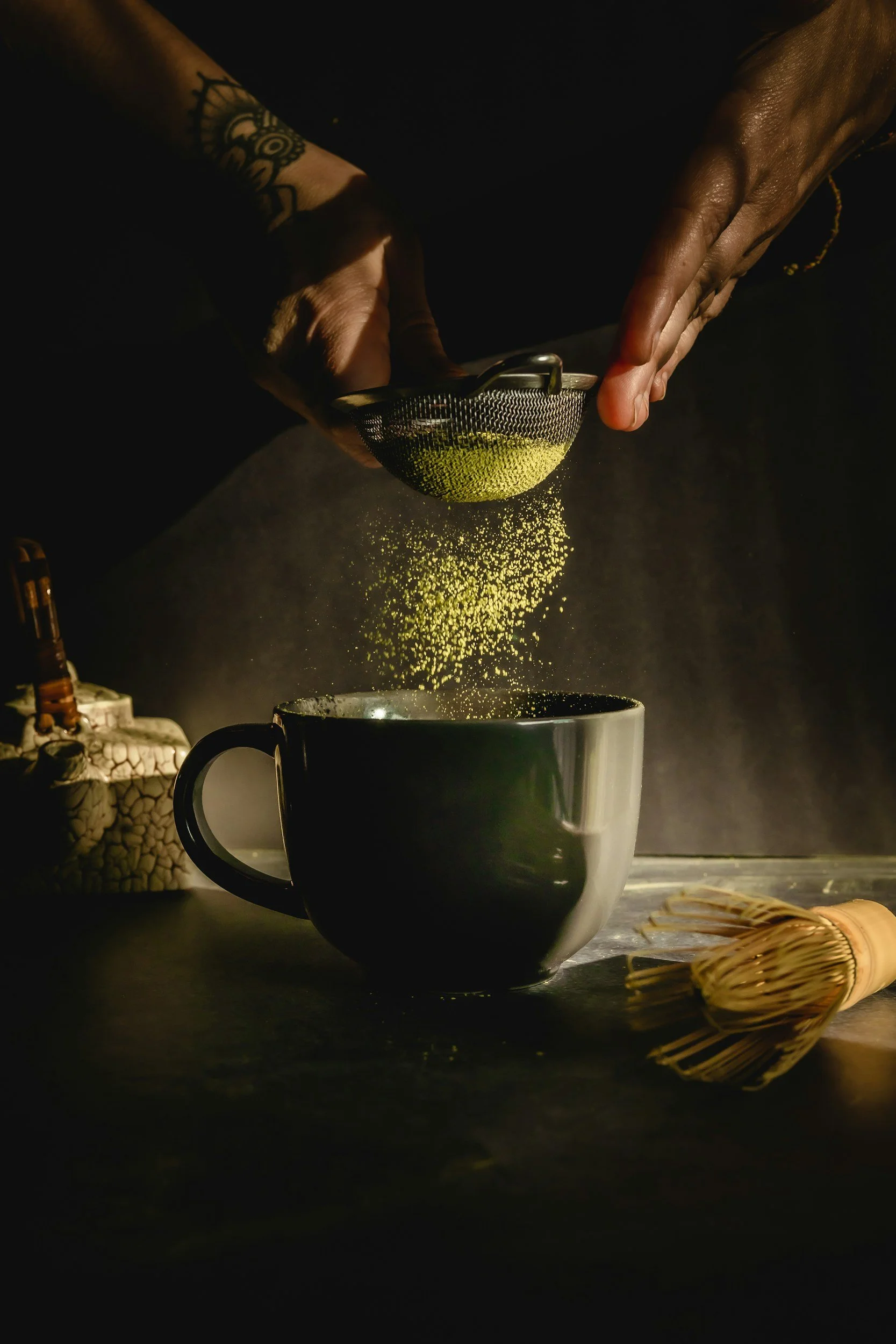
Yes, matcha has caffeine, and more than any other common green tea. Ceremonial grade matcha powder contains about 19–44 mg of caffeine per gram, so a standard cup made with 2 g (about 1 teaspoon) delivers roughly 38–88 mg. That is usually less than an 8 oz cup of brewed coffee (about 95 mg) and two to three times more than a cup of steeped green tea (about 30 mg).
Quick answer: caffeine in matcha
Per gram of powder: 19–44 mg
Per ½ teaspoon (1 g): about 19–44 mg
Per 1 teaspoon (2 g), a standard cup: about 38–88 mg
Per 2 teaspoons (4 g), a strong cup or café latte: about 76–176 mg
Japan’s official lab figure: 48 mg in a 1.5 g serving (about 32 mg per gram)
The range is wide because caffeine depends on the grade of the leaves, how much powder goes in, and how the tea was grown. Below, we break down exactly how much caffeine is in matcha green tea, how it compares with coffee, and why matcha energy feels calmer than a coffee buzz.
How much caffeine is in matcha?
A cup of matcha tea has about 19–44 mg of caffeine for every gram of powder you whisk in, so the dose you scoop decides the caffeine you get. Use this table to find your cup.
How much caffeine is in matcha? Serving calculator
Matcha has about 19–44 mg of caffeine per gram of powder. Find your scoop below.
| Matcha powder | Roughly | Caffeine (range) | Caffeine (MAFF average, 32 mg/g) |
|---|---|---|---|
| 1 g | ½ tsp | 19–44 mg | 32 mg |
| 1.5 g | ¾ tsp / 1 chashaku scoop | 29–66 mg | 48 mg |
| 2 g Standard cup | 1 tsp (usucha, thin tea) | 38–88 mg | 64 mg |
| 3 g | 1½ tsp | 57–132 mg | 96 mg |
| 4 g | 2 tsp (koicha, thick tea) | 76–176 mg | 128 mg |
Only the powder counts: 2 g in a small bowl or a large latte carries the same caffeine. For comparison, an 8 oz cup of brewed coffee has about 95 mg.
Two things make matcha unusual. First, you drink the whole leaf, so nearly all of its caffeine ends up in your cup. Second, the cup size does not matter: 2 g of matcha in 60 ml of water or in a 350 ml latte carries the same caffeine. Only the powder counts.
If you want one number to remember, use about 30 mg per gram, or 60–70 mg per teaspoon. That is close to the average reported by Japan’s Ministry of Agriculture, Forestry and Fisheries (MAFF) food data.
Why matcha has more caffeine than regular green tea?
Matcha and regular green tea or green tea powders such as hojicha powder come from the same plant, Camellia sinensis, but matcha delivers two to three times more caffeine per cup. Three things explain the gap.
You consume the whole leaf. Regular green tea is steeped and the leaves are thrown away, leaving much of their caffeine behind. Matcha leaves are stone-ground into powder and whisked into water, so you drink all of it.
Shade-growing. Tea bushes for matcha are covered for around three to four weeks before harvest. Less sunlight pushes the plant to make more chlorophyll, amino acids such as L-theanine, and caffeine.
Young, tender leaves. High-grade matcha uses the first, youngest leaves of the spring harvest. Young leaves and buds hold more caffeine than older, larger leaves.
The result: one cup of brewed green tea has about 30 mg of caffeine, while a teaspoon of matcha has about 38–88 mg.
Matcha vs coffee vs other teas: caffeine compared
Matcha vs coffee per gram has about three times more caffeine (19–44 mg vs 10–12 mg per gram). But a cup of coffee uses far more grounds, so a typical cup of coffee still has more caffeine than a typical cup of matcha.
Matcha vs coffee vs other teas: caffeine per serving
A standard cup of matcha sits between black tea and brewed coffee.
| Drink (typical serving) | Caffeine |
|---|---|
| Espresso, double shot60 ml | ~125 mg |
| Brewed coffee8 oz / 240 ml | ~95 mg |
| Matcha1 tsp / 2 g powder | ~38–88 mg |
| Espresso, single shot30 ml | ~63 mg |
| Matcha, MAFF average1.5 g in 150 ml | 48 mg |
| Black tea8 oz | ~47 mg |
| Oolong tea8 oz | ~30–40 mg |
| Green tea, steeped8 oz | ~30 mg |
| Hojicha, roasted green tea8 oz | ~20–30 mg |
| Decaf coffee8 oz | ~2–5 mg |
The exception is a strong cup. Double the powder to 4 g and matcha can reach 128–176 mg, more than a mug of filter coffee. So the honest answer to “does matcha have more caffeine than coffee?” is: usually not per cup, but it can, depending on how much powder you use.
How much caffeine is in a matcha latte?
A matcha latte has the same caffeine as the matcha in it; the milk adds none. Most café lattes use 2–4 g of powder, which works out to roughly 40–175 mg per drink.
Homemade latte, 1 tsp (2 g): about 38–88 mg
Café latte, small or medium: often 2–3 g, so about 40–130 mg
Large or “extra shot” latte: 4 g or more, up to about 175 mg
Pre-sweetened latte mixes: often lower, because sugar and milk powder replace some of the matcha. Check the label.
Bottled or canned matcha drinks: vary widely; the caffeine is usually printed on the can.
If you buy matcha lattes regularly, ask how many scoops or grams the café uses. A larger cup does not always mean more matcha.
What affects the amount of caffeine in matcha green tea?
The amount of powder matters most; grade and harvest come next. Here is what moves the number and what doesn’t.
| Factor | Effect on caffeine | Why |
|---|---|---|
| Amount of powder | Biggest effect | Caffeine scales directly with grams: 4 g has twice the caffeine of 2 g. |
| Grade (ceremonial vs culinary) | Ceremonial is usually higher | Ceremonial grade uses young first-harvest leaves, which hold more caffeine. Culinary grade often uses later, older leaves. |
| Harvest | First flush is usually higher | Spring leaves are younger and more shaded. |
| Shading time | Longer shading tends to raise it | Shade boosts caffeine and L-theanine in the leaf. |
| Freshness | Small effect | Old or poorly stored matcha loses flavour and colour faster than caffeine. |
| Water temperature Myth | Little effect | Unlike steeped tea, you drink the whole leaf, so hotter water does not pull out "more" caffeine. Use 70–80°C (160–175°F) for better taste. |
| Cup size or milk | No effect | Diluting the drink spreads the caffeine; it does not change the total. |
Myth check: many guides say brewing time and water temperature change matcha’s caffeine. That is true for steeped tea, not for matcha. Because the powder is suspended, not infused, nearly all the caffeine reaches you either way.
Why matcha energy feels different from coffee?
Matcha’s caffeine comes packaged with L-theanine, an amino acid that many drinkers say turns the buzz into calm focus. Matcha is one of the richest dietary sources of L-theanine, thanks to shade-growing.
Calm alertness: Clinical studies that pair caffeine with L-theanine have found better attention and task-switching than caffeine alone, with fewer reports of jitteriness.
A steadier feel: Many people describe matcha’s lift as gentler and longer, without the sharp peak and dip of coffee. The research here is still limited, so treat “no crash” as common experience rather than proven fact.
Same caffeine rules apply: L-theanine does not cancel caffeine. Caffeine’s half-life is about 3–7 hours in most adults, so a late-afternoon matcha can still affect sleep.
In short: a cup of matcha may have less caffeine than coffee, but many people find it a smoother way to get it.
How much matcha is safe to drink per day?
For most healthy adults, up to 400 mg of caffeine a day is considered safe, which is roughly 4–6 cups of matcha made with 2 g each. Your own limit may be lower if caffeine makes you anxious or keeps you awake.
| Group | Suggested caffeine limit | About how much matcha |
|---|---|---|
| Healthy adults | 400 mg / day maxUS FDA, EFSA | 4–6 cupsat 2 g each |
| Single sitting, adults | 200 mg at onceEFSA | About 4–6 gof powder at most |
| Pregnant or breastfeeding | Under 200 mg / dayNHS, EFSA, ACOG | About 2 cupsat 2 g each, counting all other caffeine |
| Children and teens | Much lowerMany experts advise avoiding caffeine | Best avoidedor kept occasional |
Tips for drinking matcha comfortably:
Count all your caffeine, including coffee, tea, cola, energy drinks and chocolate.
Stop about 6–8 hours before bed if you are sensitive to caffeine.
Drink it with or after food if matcha on an empty stomach makes you queasy.
If you are pregnant, have a heart condition, or take medicines that interact with caffeine, check with your doctor or midwife.
How to make matcha with more or less caffeine
You control matcha’s caffeine with the scoop. Here is a basic cup, then how to adjust it.
Basic cup (about 38–88 mg):
Sift 2 g (1 teaspoon) of matcha into a bowl to break up clumps.
Add about 60–80 ml of water at 70–80°C (160–175°F), not boiling.
Whisk briskly in a “W” or “M” motion with a bamboo whisk (chasen) for 15–20 seconds, until frothy.
Top up with more water or steamed milk for a latte.
For less caffeine:
Use ½ teaspoon (1 g) for about 19–44 mg.
Choose culinary grade, which often has a little less caffeine.
Try hojicha powder, a roasted green tea that is naturally low in caffeine.
For more caffeine:
Use 1½–2 teaspoons (3–4 g), up to about 176 mg.
Choose a first-harvest ceremonial grade.