Choosing between matcha and coffee: the real deal
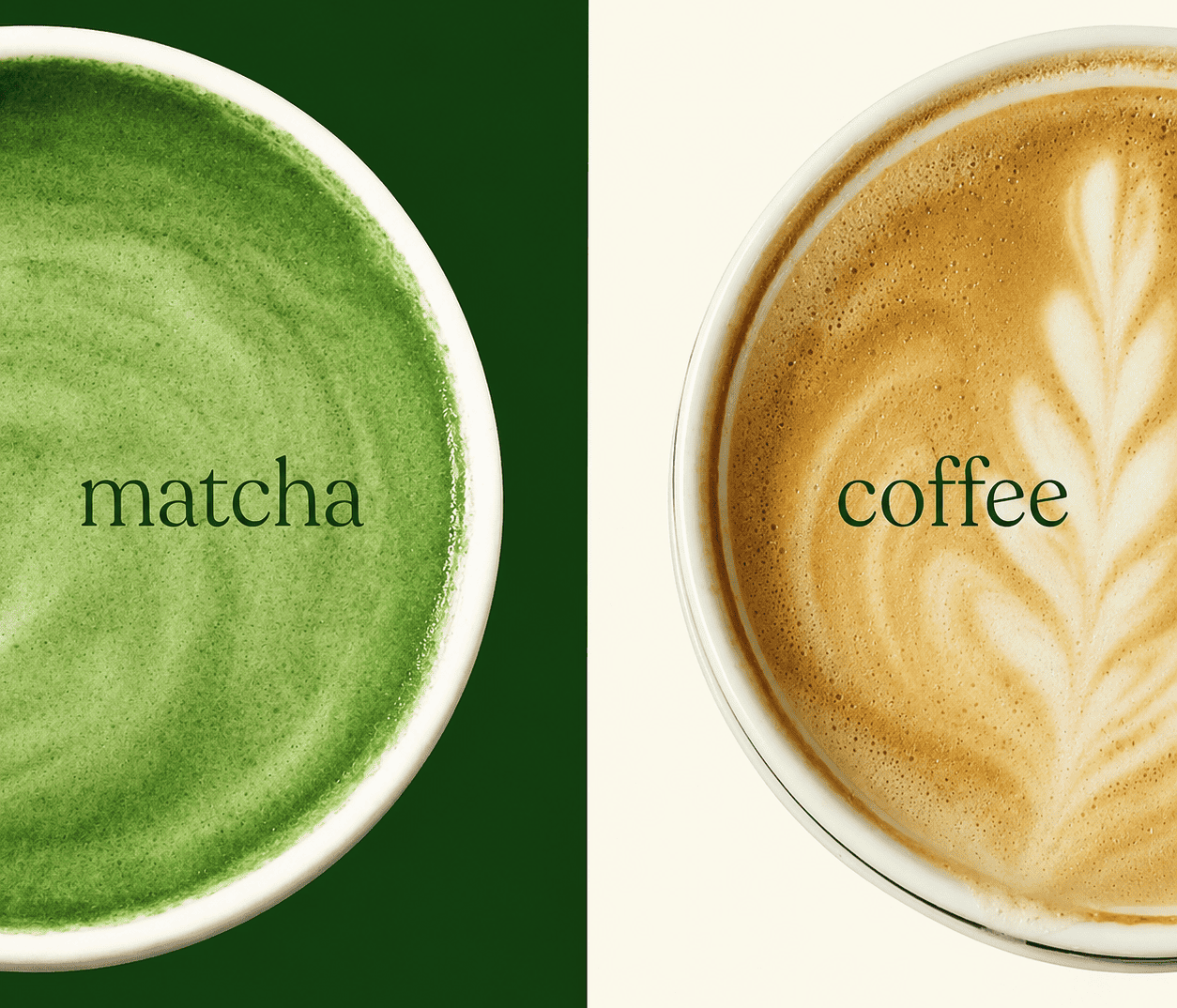
There has always been this long running debate between what is better for you coffee or matcha ? Every single publication or company is trying to sell the idea that matcha has consistent energy release , coffee gives jitters, matcha has too many metals in it and so on. Often times it seems that one industry is attacking the other like in a traditional battle between Coke vs Pepsi.
But what is the actual truth behind all of this? And should you go for matcha or for coffee. While there is no universal answer to it, here are some ideas that we feel are worth considering when choosing between the two.
1.Are you a person with a sensitive stomach?
There is no secret to , and many people have experienced it. For some users coffee can be hard on the stomach. And while it always depends on the strength and type of coffee you consume of course. More often than not coffee causes more discomfort to the stomach than matcha.
There are many reasons why coffee is harder on the stomach but most common ones are :
Coffee has higher acidity and naturally stimulates stomach acid. With a pH of around 5 vs 5.5-7 of matcha coffee is naturally more acidic ( as a ph of 7 is considered neutral and matcha is closer to that ) and less gentle on the stomach
Coffee gives a sudden caffeine spike which can trigger a stress response making your stomach churn . Matcha on the other hand has L-theanine which coffee does not. L-theanine promotes a gentle and gradual release of caffeine making it gentle for people who are sensitive to caffeine.
2.Do you prefer quick energy boosts or are you looking more to have a relaxed long drink
If you are that type of person who prefers quick energy releases and requires quick energy boosts to stay active at work or feel more energetic for an activity , then coffee is definitely your drink of choice.
The science behind this is that coffee gives you a quicker caffeine boost because it contains a higher concentration of free caffeine that enters your bloodstream instantly, combined with a spike in stress hormones .
While matcha on the other hand has L-theanine that actually binds to caffeine molecules and acts as a physical throttle. This chemical bond slows down how quickly your intestines can absorb the caffeine, releasing it into your system gradually over 4 to 6 hours.
So that is pretty much the difference. Coffee seems to be a good choice for people looking to have a quick caffeine release , whereas matcha would work for someone who doesn’t need that quick energy boost.
3.The price point of matcha vs coffee
It's no secret that high-quality ceremonial-grade, first-flush matcha can be expensive. The finest matcha is made from carefully shaded tea leaves, harvested during a short spring harvest when flavour is at its most delicate, sweet, and rich in umami. The leaves are then processed, with stems and veins removed, before being slowly stone-ground into an ultra-fine powder. It's a meticulous process that requires significant time, expertise, and care.
That said, matcha prices can vary considerably between brands. Some matcha commands a premium because it comes from particularly renowned tea-growing regions, exceptional harvests, or highly skilled producers. Other products may be positioned as luxury items through branding, packaging, or market positioning.
In many ways, matcha is similar to other premium products. Just as two pairs of jeans can be made from comparable materials yet be sold at very different prices, two matcha powders can vary significantly in price despite offering a similar level of quality. For consumers, this means that understanding where a matcha comes from, how it is grown, and when it is harvested can often tell you more about its quality than the price tag alone.
When comparing matcha with coffee, it's also important to recognise that matcha is naturally the more expensive product. While both drinks originate from plants, the production process behind premium matcha is considerably more labour-intensive and yields are relatively limited.
Coffee, by comparison, benefits from a much larger global industry, higher production volumes, and generally lower processing costs.
Of course, there are exceptional specialty coffees that can be just as expensive as premium matcha. However, for most consumers, a good-quality coffee remains a more affordable everyday option. Matcha offers a unique flavour profile, preparation ritual, and nutritional benefits that many people feel justify the higher price, while coffee continues to be an excellent and budget-friendly choice for those who want an enjoyable daily drink without spending quite as much.

Taste
Body
Speciality
grown under shade from 21 to 28 days
Weight