How is hojicha powder made?
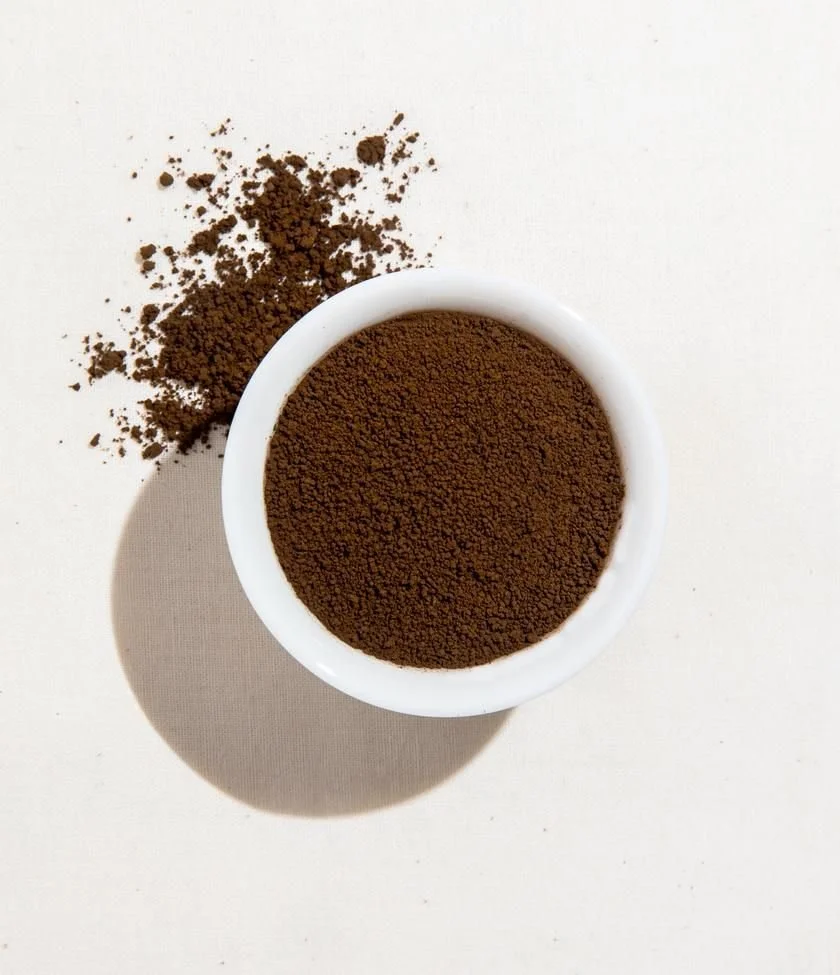
Summary:
Hojicha powder is made by roasting Japanese green tea leaves before finely grinding them into powder
Unlike matcha, the leaves are roasted, giving hojicha its warm nutty flavour
The roasting process lowers bitterness and caffeine naturally
Hojicha powder develops notes of caramel, toasted nuts, cocoa, and warm wood
Popular in lattes, desserts, baking, and iced drinks
What is hojicha powder?
Houjicha powder is a finely ground Japanese roasted green tea powder made from hojicha leaves.
Unlike traditional loose leaf hojicha, the leaves are milled into an ultra-fine powder that dissolves directly into water or milk.
This creates a richer and fuller-bodied drink because the entire tea leaf is consumed rather than simply infused.
Hojicha powder has become especially popular in:
hojicha lattes
iced drinks
baking
desserts
ice cream
café-style recipes
Compared with matcha, hojicha powder tastes:
more roasted
less grassy
naturally sweeter
lower in bitterness
softer on the palate
What tea leaves are used for hojicha powder?
Hojicha powder is usually made using Japanese green tea leaves such as:
Bancha
Kukicha
The exact flavour depends on the producer and roasting style, but the goal is usually to create a smooth, mellow, roasted flavour profile.
Many hojicha powders are produced in regions such as Kyoto, where roasted teas have been enjoyed for generations.
Step 1 — Harvesting the tea leaves
The process begins similarly to other Japanese green teas.
The tea leaves are harvested during the growing season and carefully selected for roasting.
Unlike ceremonial matcha, hojicha often uses slightly more mature leaves and stems, which naturally develop warmer and nuttier flavours during roasting.
This is one reason hojicha feels softer and less sharp compared with many vibrant green teas.
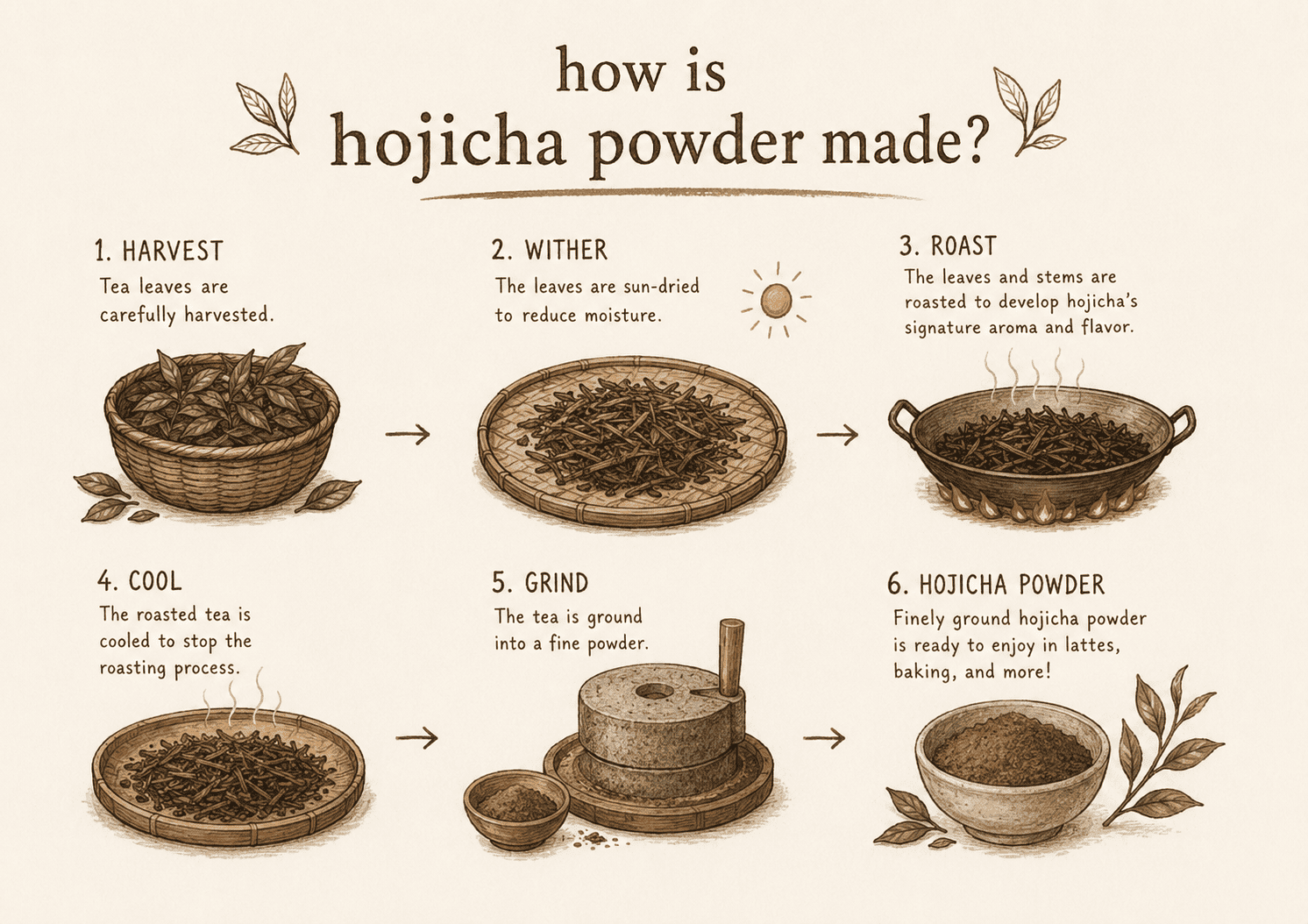
Step 2 — Steaming the leaves
After harvesting, the tea leaves are quickly steamed.
This is a traditional Japanese green tea processing method used to stop oxidation and preserve the tea.
At this stage, the tea is technically still a green tea.
The leaves are then dried and prepared for roasting.
Step 3 — Roasting the tea
Roasting is the stage that completely transforms hojicha.
The tea leaves are roasted at high temperatures until they develop their signature:
amber-brown colour
warm aroma
toasted flavour
caramel-like sweetness
During roasting, grassy and vegetal notes become softer while deeper flavours begin to emerge.
Depending on the roast level, hojicha can develop notes similar to:
roasted hazelnuts
cocoa
toasted rice
caramel
warm wood
light smoke
The roasting process also naturally reduces caffeine levels, making hojicha a popular evening tea.
Step 4 — Grinding into powder
Once roasted, the tea leaves are finely milled into powder.
This process creates the smooth texture used for modern hojicha drinks and desserts.
Unlike loose leaf tea, hojicha powder dissolves directly into liquids, giving drinks:
fuller body
creamier texture
stronger aroma
richer roasted flavour
The powder is especially loved in milk-based drinks because the roasted flavour pairs beautifully with dairy and plant-based milks.
Why hojicha powder tastes different from matcha
Although both matcha and hojicha powder are finely ground Japanese teas, their production methods are very different.
Matcha is shade-grown and steamed to preserve fresh vegetal and umami flavours.
Hojicha powder, on the other hand, is roasted after steaming.
This roasting creates a completely different flavour experience.
Matcha tends to taste:
grassy
vegetal
umami-rich
fresh and vibrant
Hojicha powder tends to taste:
roasted
nutty
caramel-like
smooth and mellow
For many people, hojicha feels softer, warmer, and easier to drink daily.
Why people love hojicha powder
Modern tea drinkers are increasingly drawn to hojicha powder because it feels approachable and comforting.
People especially love it for its:
low caffeine
minimal bitterness
café-style versatility
roasted flavour
smooth finish
It works beautifully both hot and iced and has become increasingly popular in specialty cafés around the world.
For many people, hojicha powder sits perfectly between coffee and tea.
Warm, roasted, calming, and easy to enjoy every day.

Taste
Body
Speciality
grown under shade from 21 to 28 days
Weight