What are some typical and not so typical Japanese teas?
What Are Some Typical and Not-So-Typical Japanese Teas?
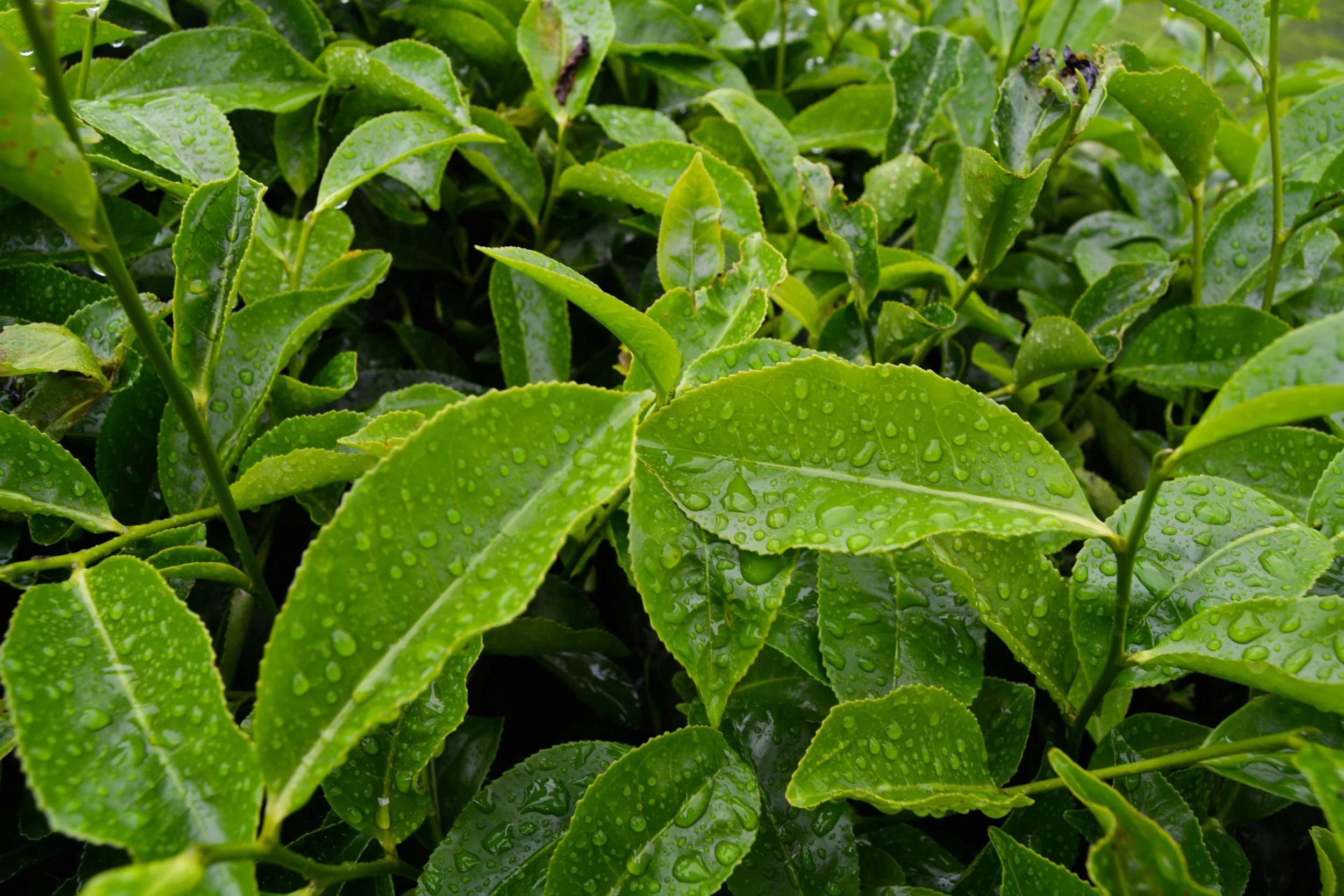
Almost every tea in this article comes from the same plant: Camellia sinensis. What separates a bright, grassy sencha from an intense, syrupy gyokuro, or a nutty hojicha from a sour, funky goishicha, isn't the plant — it's what happens to the leaf between the bush and the cup. Japan's tea identity is built on one core habit that sets it apart from China: leaves are steamed to stop oxidation almost immediately after picking, rather than pan-fired or left to oxidize. From that single starting point, four variables create the entire spectrum of Japanese tea: how much the bush was shaded before harvest, how long the leaf was steamed, whether it was roasted afterward, and — in a small, disappearing handful of cases — whether it was fermented by bacteria and mold rather than processed fresh at all.
The teas most people already know sit at the everyday end of that spectrum. The ones almost nobody outside Japan has heard of sit at the far end, and a couple of them aren't made from tea leaves at all. Here's the full range, typical to obscure.
The everyday four
Sencha, the default
Sencha is what "Japanese green tea" means to most people, and for good reason: it accounts for roughly 80% of everything grown in Japan. It's picked from bushes grown in full sun, steamed for around 30–40 seconds to lock in color and stop oxidation, then rolled into the thin, dark needles you'd recognize from any Japanese grocery shelf. The first harvest of the year, made from the youngest spring shoots, is prized above later pickings and sold as shincha or top-grade ichibancha.
One detail that rarely makes it into sencha explainers: the line between sencha and its shaded cousin, kabusecha, is a matter of days, not categories, and the exact cutoff depends on where the tea is grown. In Kyoto, for instance, a tea has to be shaded for at least two weeks before it can be labeled kabusecha — which means plants shaded for up to 13 days can still legally be sold as sencha. So a fair amount of "unshaded" sencha has actually seen a few days of shade cloth before harvest, especially from Kyoto and Kagoshima producers chasing a softer, sweeter cup.
Genmaicha, the stretcher
Genmaicha blends green tea (usually bancha or sencha) with roasted, popped brown rice, giving it a nutty, toasty edge that's completely different from any other green tea. Several origin stories circulate — a beheaded servant, thrifty Edo-period households — but the account with the most historical grounding places its creation in Kyoto sometime in the late 1920s or early 1930s, when a tea merchant looked for a use for leftover fragments of kagami mochi, the rice cakes traditionally broken apart after New Year celebrations. Roasting and adding those rice fragments to tea stretched an expensive product and gave it a genuinely new flavor, which is why genmaicha earned the nickname "the people's tea." Today it's made with everything from ordinary bancha up to sencha and even matcha (called matcha-iri genmaicha).
Hojicha, the improviser
Hojicha is sencha or bancha that's been roasted at high heat — often 150–200°C — after steaming, which turns the leaf from green to reddish-brown and completely changes its chemistry: the compounds responsible for bitterness break down, caffeine drops, and grassy notes give way to caramel and hazelnut. The most consistent account of its origin puts it in 1920s Kyoto, where a merchant roasted unsold or lower-grade leaves and stems over charcoal rather than throw them away. It worked on two levels at once — it rescued inventory that would otherwise go to waste, and the smell of roasting tea proved to be excellent advertising, drawing customers straight into the shop.
Mugicha, the one that isn't actually tea
Mugicha, or roasted barley tea, gets lumped in with Japan's teas constantly, but it contains no Camellia sinensis at all — it's roasted barley grain steeped in hot water, which makes it naturally caffeine-free. It's also, by most accounts, older than green tea in Japan: barley infusions were already being drunk by the Nara-period aristocracy, centuries before sencha existed in anything like its modern form, and it later became a working-class staple sold hot at roadside "mugiyu" stalls through the Edo period.
The detail worth knowing is how recently mugicha became the fridge staple it is today. The first mugicha tea bags weren't sold until 1963, by a company called Hitachiya Honpo, with the first no-boil, cold-brew bags following from Ishigaki Foods in 1965 — innovations that landed right as refrigerators were becoming standard in Japanese homes. The market has kept growing well past that: it roughly tripled over the following decade, in part because barley tea's caffeine-free, easy-to-stockpile nature made it a go-to during Japan's post-2011 power-conservation summers and the record 2018 heatwave.
Turning up the shade: kabusecha and gyokuro
Shading a tea bush before harvest blocks photosynthesis, which stops the plant from converting the amino acid L-theanine (savory, sweet) into catechins (bitter, astringent). The longer the shade, the more concentrated that effect becomes — and Japan has essentially built a quality hierarchy out of exactly how many days a bush spends in the dark.
Kabusecha, "covered tea," is shaded for roughly one to two weeks (Haki kabuse sencha is shaded for 2 weeks prior to cultivation) before harvest using netting. It's not as intense — or as expensive — as gyokuro, but it's noticeably rounder and more umami-forward than standard sencha, which makes it a good next step for anyone who wants to taste what shading actually does without paying gyokuro prices.
Gyokuro, "jade dew," is shaded for 20–30 days and represents less than 1% of Japan's total tea production, brewed in small volumes with cool water to draw out an intensity closer to an espresso shot than a cup of tea. Its origin has a specific, well-documented date: around 1835, a Yamamotoyama tea merchant named Yamamoto Kahei VI was visiting Uji to study tencha (the shaded, unrolled leaf ground into matcha) when he noticed that leaves shaded by local farmers to protect them from frost had developed an unusually sweet, sticky character. He processed the discovery as a rolled leaf tea rather than grinding it, and the result became gyokuro — a category that sits, deliberately, between the everyday sencha most people drank and the ceremonial matcha reserved for the elite.
(Matcha itself — ground tencha — is the most globally famous shaded tea by far, so it's left out of the "not so typical" list here. If you know matcha, you already know where this branch of the shading spectrum ends up.)
The byproduct teas nobody names
Sencha and gyokuro production doesn't use every part of the harvested leaf, and Japan's habit of not wasting anything (a value often summed up as mottainai) means the leftovers became their own teas rather than compost.
Kukicha (twig tea) is made from the stems and stalks separated out during processing. It's lighter and sweeter than the leaf tea it came from. When the stems come specifically from gyokuro production, the resulting kukicha is renamed karigane or shiraore and is treated as a specialty in its own right, not a discount product.
Konacha is the dust and small leaf fragments left over after sencha or gyokuro is finished — the cheapest, lowest grade of the bunch, and also the fastest to brew into something strong and dark. It's the tea traditionally served free at sushi restaurants, where it's called agari, precisely because it stands up to fish flavors and clears the palate.
Mecha comes from the tea buds and tips, and when it's sourced from high-grade leaf it can carry real quality at a fraction of the price of the sencha it was separated from.
The pan-fired outlier
Every tea covered so far is steamed. Kamairicha is the one significant exception.
Kamairicha is pan-fired in a heated kettle instead of steamed — a method historically linked to Chinese potters who settled in Kyushu and is still concentrated there today, especially in Miyazaki. Skipping the steam step and going straight to dry heat produces a noticeably less vegetal, sweeter cup with a distinctive curled leaf shape instead of sencha's straight needles.
Tamaryokucha, also called guricha, sits in between: it's steamed like ordinary Japanese tea, but it skips sencha's final rolling stage, so the leaf keeps a loose, curled shape reminiscent of kamairicha without ever touching a hot pan. Ureshino in Kyushu is the best-known production area, where the tea is sold specifically under the guricha name and known for a tangy, almost citrus-like edge that's unusual among Japanese greens.
The deep cut: Japan's four fermented teas
This is where most "typical vs. unusual" roundups stop at gyokuro and call it a day. But there's an entire separate branch of Japanese tea that doesn't get steamed fresh at all — it gets deliberately fermented with mold and bacteria, the way pu-erh is made in China, and it's on the edge of disappearing.
Four of these post-fermented teas survive, each isolated in its own valley, each fermented by a different microbial process:
Goishicha, from the mountain town of Otoyo in Kochi Prefecture, is arguably the rarest. Leaves are steamed for hours in wooden barrels, then fermented twice — first by aerobic mold, then by anaerobic lactic acid bacteria — before being pressed into small squares and sun-dried. The name comes from the way those dried squares resemble the black stones used in the board game go. The entire process takes about two months, and the tradition nearly vanished in the 1970s, when a single farming family was reportedly the only one still making it; a small cooperative has since revived production, and in 2018 the method was formally recognized as an Intangible Cultural Property of Japan.
Awabancha, from Tokushima Prefecture, skips the mold stage entirely and relies on pure lactic-acid fermentation, giving it a mild sourness. It's not treated as a prestige tea the way gyokuro is — it's a folk tea, made by families for their own households and drunk casually throughout the day.
Ishizuchi Kurocha, from Ehime Prefecture, uses the same two-stage mold-then-lactic process as goishicha but developed independently in its own region, with its own distinct character.
Batabatacha, from Toyama Prefecture, is fermented by mold alone with no lactic-acid stage, which puts it in a different chemical category from the other three — one comparative study found it has almost no measurable antioxidant activity, in sharp contrast to the others. What really sets it apart, though, is how it's served: whisked into a thick froth with a tea whisk, sometimes with a pinch of salt added.
None of these four are widely exported, and none are likely to show up in a typical Japanese tea starter set. But they're arguably the most genuinely "not so typical" thing Japan's tea culture has produced — a reminder that green tea, roasted tea, and matcha are only part of the picture.
The pattern underneath it all
Look at this list closely and a theme shows up: a striking number of Japan's teas exist because someone refused to throw something away. Genmaicha stretched an expensive product with leftover rice. Hojicha rescued unsold stock by roasting it. Kukicha, konacha, and mecha all turn sencha and gyokuro's discarded stems, dust, and tips into their own drinks. Even the rare fermented teas survive today less because of mass demand and more because a handful of families in a handful of valleys decided a centuries-old method was worth keeping alive. Japanese tea culture isn't just about the famous end of the spectrum — sencha, matcha, gyokuro — it's a genuinely resourceful system where almost nothing from the harvest goes to waste, and that instinct is what produced most of the "not so typical" teas on this list.
Quick reference · Japanese teas, typical to rare
| Tea | What makes it | Flavor profile | Where it's from |
|---|---|---|---|
| Everyday | |||
| Sencha | Full sun, steamed, rolled | Bright, grassy — ~80% of Japan's tea | Nationwide |
| Genmaicha | Green tea + roasted rice | Nutty, mild, low intensity | Nationwide |
| Hojicha | Roasted after steaming | Toasty, caramel, low caffeine | Nationwide |
| Mugicha | Roasted barley, not tea leaf | Toasty, caffeine-free | Nationwide, esp. summer |
| Shaded | |||
| Kabusecha | Shaded 7–14 days | Mellow umami | Kyoto, Shizuoka |
| Gyokuro | Shaded 20–30 days | Intense, syrupy umami | Uji, Yame |
| Byproduct | |||
| Kukicha | Made from stems and twigs | Light, mildly sweet | Nationwide |
| Konacha | Dust/fragments from sencha, gyokuro | Strong, fast-brewing | Nationwide — served at sushi counters |
| Mecha | Made from buds and tips | Delicate, can be high quality | Nationwide |
| Pan-fired | |||
| Kamairicha | Pan-fired, not steamed | Sweet, nutty, less vegetal | Kyushu (Miyazaki) |
| Tamaryokucha / Guricha | Steamed, not rolled | Tangy, citrus-like | Ureshino, Kyushu |
| Fermented | |||
| Goishicha | Mold, then lactic fermentation | Sour, mellow | Otoyo, Kochi |
| Awabancha | Lactic fermentation only | Mildly sour | Tokushima |
| Ishizuchi Kurocha | Mold, then lactic fermentation | Earthy, sour | Ehime |
| Batabatacha | Mold fermentation, whisked | Earthy, sometimes salted | Toyama |